
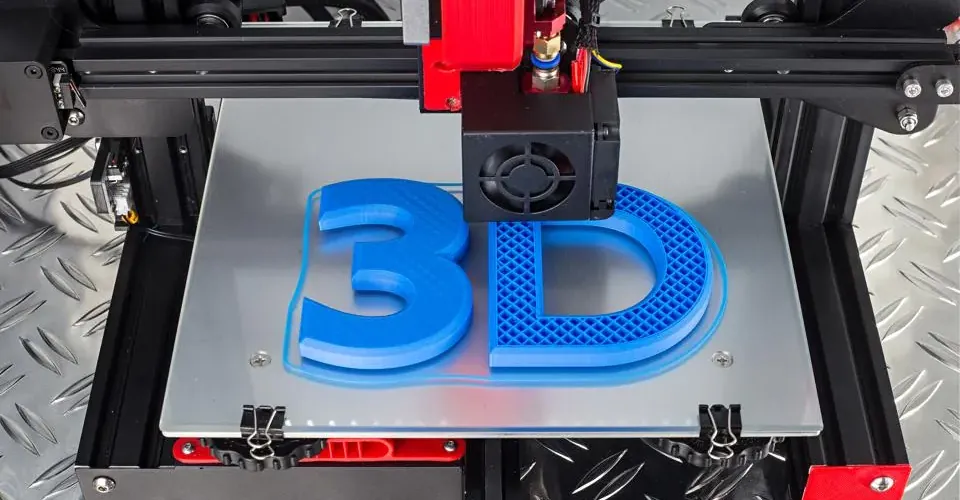
In recent years, 3D printing in Greece (3D Printing greece) as well as around the world has emerged as a groundbreaking technology with the potential to revolutionize various industries. From construction and healthcare to design and education, the applications of 3D printing are vast and awe-inspiring. In this article, we delve into the world of 3D printing, exploring the capabilities, benefits and exciting possibilities it presents.
The Power of 3D Printing:
3D printing, also known as additive manufacturing, is a process that allows the creation of three-dimensional objects from digital designs (3D Designs). Unlike traditional manufacturing methods that involve removing material from a larger block (CNC) or mold (injection molding), 3D printing adds layer upon layer of material to build the final object. Layer-by-layer material deposition gives 3D printers the ability to produce complex geometries and intricate details that were previously unattainable.
Applications across industries:
Industry: 3D printing has disrupted the manufacturing industry by providing faster and more efficient production methods. Companies can create prototypes, custom parts, and even finished products directly from digital models (functional parts), reducing lead times and enabling rapid iteration.
Healthcare: The healthcare sector has been profoundly impacted by 3D printing. It enables the production of medical devices, prosthetic limbs, and implants tailored to the individual needs of patients. Additionally, researchers are exploring the use of 3D printing in tissue engineering and drug delivery systems, which holds promise for future developments.
Design and Architecture: Architects and designers use 3D printing to bring their ideas to life. It allows for the creation of complex models, scale models, and prototypes with ease, facilitating better visualization, customer engagement, and improved design.
Education: 3D printing has found its way into educational institutions, enhancing STEM education and fostering creativity. Students can turn their ideas into tangible objects, helping them understand complex concepts and develop problem-solving skills.
Benefits of 3D Printing:
3D printing frees designers from traditional manufacturing constraints. Complex and organic shapes, internal structures and intricate details can be easily incorporated into designs, driving innovation and pushing the boundaries.
Cost efficiency: For small-scale production or prototyping, 3D printing eliminates the need for expensive molds, tools and assembly lines. This translates into reduced costs, especially for customized or low-volume production.
Customization and personalization: 3D printing enables the creation of personalized products and customized solutions. From custom-made medical devices to one-of-a-kind jewelry.
Sustainability: By using only the necessary amount of materials and minimizing waste, 3D printing offers a more sustainable manufacturing alternative. It promotes resource efficiency, reduces the carbon footprint and supports the circular economy.
Future Possibilities:
As 3D printing continues to evolve, the potential for innovation seems limitless. Researchers are exploring the use of advanced materials, such as biocompatible polymers and metal alloys, opening the door to groundbreaking applications in medicine and aerospace. In addition, advances in multi-material and multi-color printing techniques promise to further expand the capabilities of 3D printing.
Conclusion:
3D printing is transforming the way we design, manufacture, and create. Its flexibility, adaptability, and cost-effectiveness make it a game-changer across industries. As the technology evolves, we can expect even more remarkable developments to shape our future. Embrace the power of 3D printing and unlock a world of endless possibilities.